
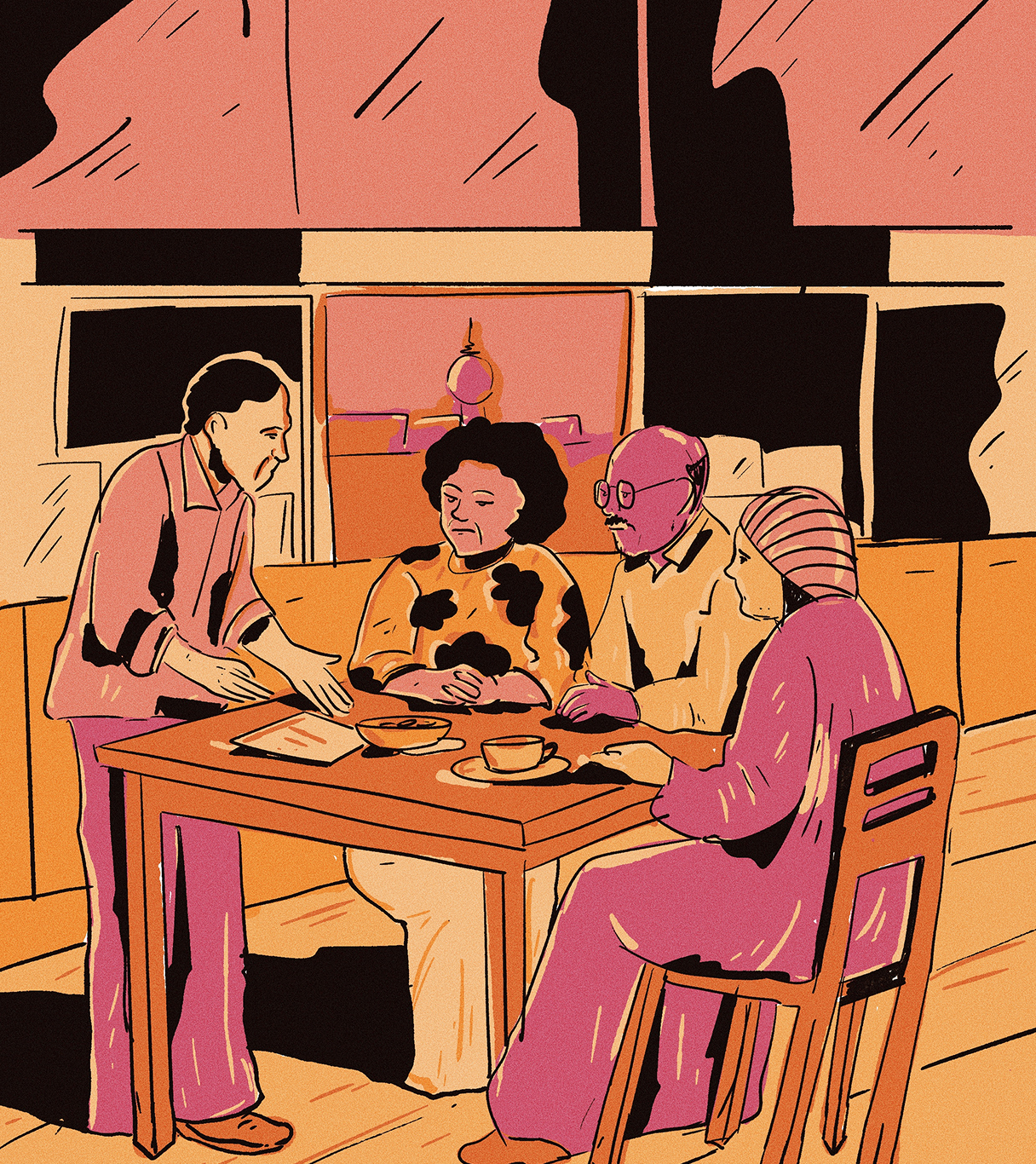
What does FaMiPA do?
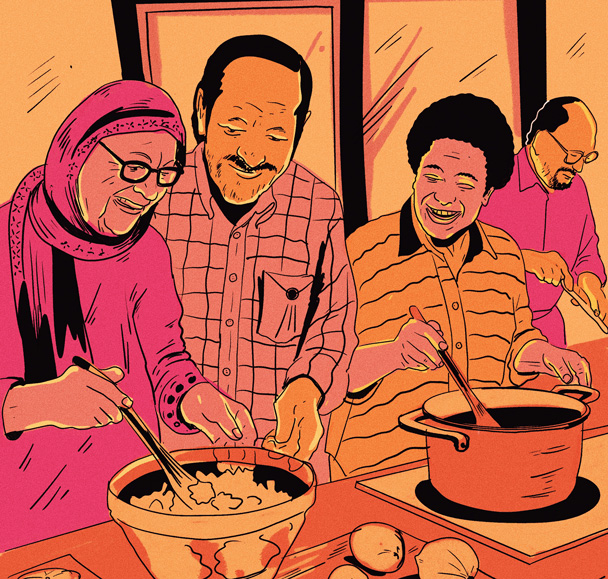
The Center for Migration, Care, and Aging (FaMiPA) advocates for the needs, rights, and participation of older adults with a migration background. It takes an intersectional, anti-discriminatory, and participatory approach. On its website, FaMiPA provides multilingual information for older migrants, their families and loved ones, and professionals working in the fields of migration, aging, and care. FaMiPA connects stakeholders, fosters self-efficacy, and serves as a bridge between practice, academia, and policy.
Topic overview
For senior citizens & their relatives

Join us!
Dear seniors with a background in migration, here you will find information about activities you can participate in.
Find support
Unfortunately, FaMiPA does not provide counseling itself. However, here you’ll find resources where you can get help and support regarding caregiving and aging in Berlin.
Senior election
The next election for senior citizens’ representatives in Berlin will take place in March 2027. Here, we explain what the senior citizens’ election is and what you can do.
Events
Understanding care
We’ll soon be explaining the most important terms related to caregiving and aging here.
Archive
Here we provide information on news, projects and developments relating to migration, ageing and care in Berlin.
For actors and organizations
Dear network partners, dear colleagues,
Here you will find offers, event information and information on migration, care and ageing. We offer you space for exchange and networking. Through specialist lectures, workshops and training sessions, we provide up-to-date knowledge on topics such as diversity-sensitive care, anti-discrimination and participation.


Our formats
FaMiPA has developed various formats for different stakeholders in the fields of migration, aging, and care. Here you can find more information about the different formats and the dates.
Your networking options
Here you will find our regular offers for exchange, networking and cooperation with actors in the field of migration, ageing and care.
Archive
Here we provide information on news, projects and developments relating to migration, ageing and care in Berlin.
events
Here you can find out about upcoming professional events hosted by FaMiPA and other organizations.
Do you also have an event in this field? Then please send it to us at famipa@awoberlin.de or use this link.
Glossar
Diskriminierungskritisch
Diskriminierungskritisch beinhaltet das Bewusstsein und die Berücksichtigung, dass Diskriminierung in unserer Gesellschaft allgegenwärtig ist. Diese Haltung impliziert das Wissen darüber, dass alle Menschen aufgrund verschiedener Diskriminierungsformen sozial positioniert sind.
[Quelle: Informations- und Dokumentationszentrum für Antirassismusarbeit e.V. (IDA) (o.J.)]
Intersektionalität
Intersektionalität bedeutet die Berücksichtigung und das Bewusstsein darüber, dass verschiedene Diskriminierungsformen – z.B. aufgrund von Geschlecht, Herkunft, Alter, Klasse oder Aufenthaltsstatus – nicht getrennt voneinander wirken, sondern sich wechselseitig verstärken.
[Quelle: Crenshaw 1989]
Weiterführende Quellen:
Dr. Emilia Roig erklärt Intersektionalität (Friedrich Ebert Stiftung):
https://www.youtube.com/watch?v=hOa4MuPQbMM
Entstehungsgeschichte Intersektionalität einfach erklärt:
https://youtu.be/EP4gOj4TTiQ?si=rrIRD9eZjYxS62Va
Partizipation
Partizipation bedeutet (politische) Teilhabe. Teilhabe bedeutet mitmachen und mitbestimmen.
Pflegebedürftigkeit
Wenn Sie merken, dass Sie nicht mehr allein Sachen schaffen (z.B. waschen, einkaufen oder essen), besteht bei Ihnen vielleicht eine Pflegebedürftigkeit.
Ob bei Ihnen eine Pflegebedürftigkeit vorliegt, prüft der Medizinische Dienst. Für diese Prüfung müssen Sie einen Antrag stellen bei Ihrer Pflegekasse. Unter Pflegegrad finden Sie mehr Informationen hierzu.
Pflegegrad
Um Pflegeleistungen beantragen zu können, muss man einen Pflegegrad haben. Einen Pflegegrad kann man beantragen mit einem Antrag auf einen Pflegegrad. Dieser Antrag stellen Sie bei Ihrer Pflegekasse: Gesetzliche Krankenversicherung: Ihre Pflegekasse ist gleich wie Ihre Krankenkasse. Dort stellen Sie den Antrag. Private Versicherung: Ihre private Pflege-Pflichtversicherung (PPV). Dort stellen Sie den Antrag. Falls Sie Unterstützung bei der Antragstellung brauchen, helfen Ihnen die Interkulturelle Brückenbauer*innen in der Pflege und die Berliner Pflegestützpunkte.
Knowledge and resources
Information material, guides and downloads
In our download area you will soon find suitable links to multilingual brochures, guidelines and information on migration, care and ageing.
Knowledge and resources
Knowledge transfer on our topics
Here we impart knowledge on migration, ageing and care and raise awareness of diversity, participation and anti-discrimination. Senior citizens with a history of migration as well as stakeholders and organizations in the field can find brochures, publications and free materials on migration, care and ageing in several languages.
Events & News
Here's what happens at FaMiPA
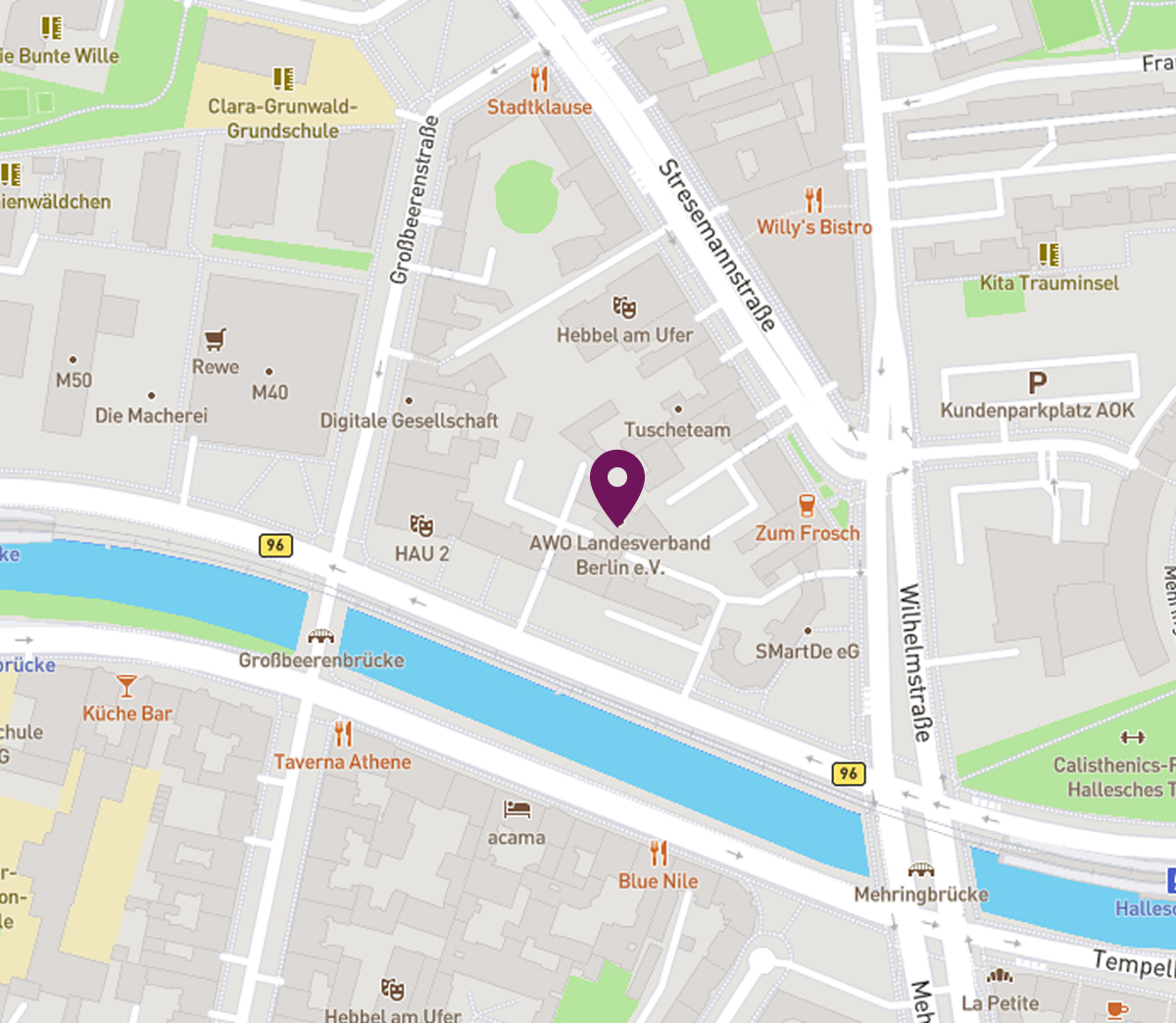
Contact us
We listen
You can reach us from Monday – Friday 10 am – 4 pm
Telephone